


Mercedes AMG Petronas Formula One Team is a professional racing team and constructor based in Brackley, Northamptonshire, United Kingdom.


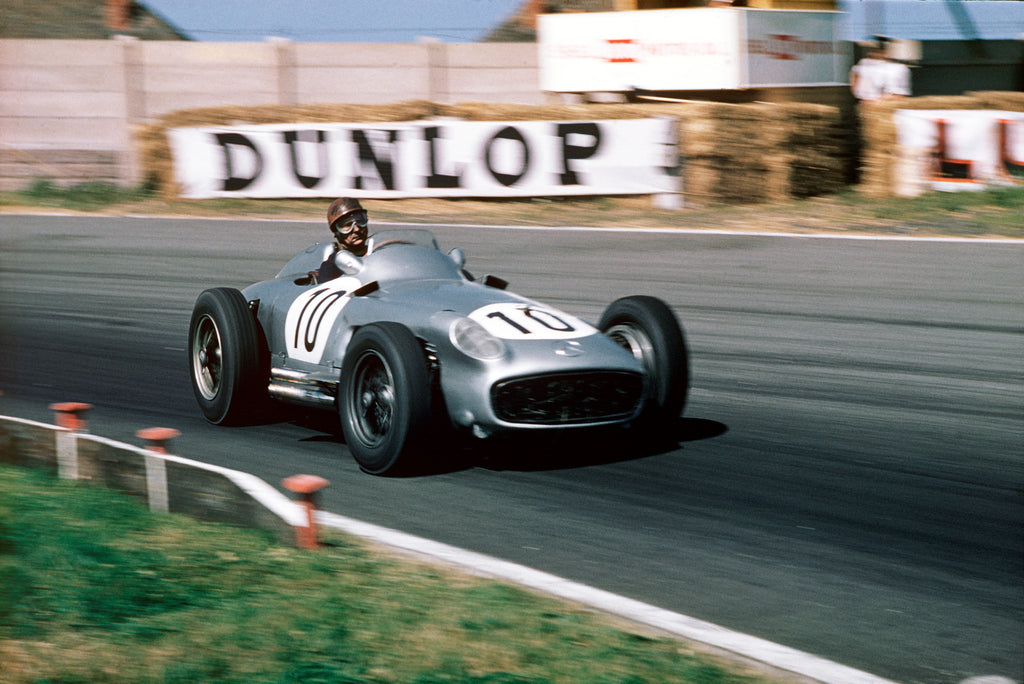
The roots of the team lie deep in motorsport history, long before the modern Formula One entity existed. The legend began in the 1930s with the Auto Union vs. Mercedes-Benz rivalry, where the cars were dubbed "Silver Arrows" (Silberpfeile) after reportedly scraping off their white paint to meet weight regulations, exposing the bare aluminum. Mercedes-Benz officially entered the Formula One World Championship in 1954. They immediately set the standard for engineering excellence with the W196, a car far ahead of its time. Led by the legendary Juan Manuel Fangio, Mercedes won the Drivers' Championship in both 1954 and 1955. Alongside teammates like Stirling Moss, they dominated the grid. However, this golden era was cut short. Following a tragic accident at the 1955 24 Hours of Le Mans (which did not involve the F1 team directly but involved a Mercedes car), the manufacturer withdrew from all motorsport at the end of the season, leaving the sport while at the very peak of their power.
After decades of serving only as an engine supplier (most notably to McLaren), Mercedes-Benz made a sensational return as a full works team in 2010. They acquired the Brawn GP team, which had just won the championship, and rebranded it. To signal their intent, they brought the seven-time world champion Michael Schumacher out of retirement to partner with the young talent Nico Rosberg. These early years were defined by rebuilding and struggle. The team often found themselves in the midfield, fighting to understand the tires and aerodynamics. However, these years laid the critical groundwork. Under the technical guidance of Ross Brawn and later Toto Wolff and Niki Lauda, the team expanded its facilities in Brackley and Brixworth. The first breakthrough came at the 2012 Chinese Grand Prix, where Nico Rosberg secured the team's first pole position and victory since 1955. In 2013, Lewis Hamilton replaced Schumacher, signaling a shift in momentum as the team finished second in the Constructors' Championship.

The 2014 season marked the introduction of the V6 Turbo Hybrid power units, a regulation change Mercedes had prepared for better than anyone else. The Mercedes PU106A engine was a masterpiece of engineering, giving the W05 Hybrid car a massive advantage. This sparked an era of dominance rarely seen in sports. From 2014 to 2016, the championship was essentially a private duel between teammates Lewis Hamilton and Nico Rosberg. The tension between the two childhood friends turned into a fierce rivalry, dubbed the "War of the Silver Arrows." They traded wins and collided on track (notably at Spa 2014 and Spain 2016). Hamilton won the titles in 2014 and 2015, but Rosberg dug deep to secure the 2016 World Championship in a dramatic finale in Abu Dhabi, only to retire from the sport days later. During this period, Mercedes won nearly every race, shattering records for pole positions and one-two finishes.

Following Rosberg’s retirement, Valtteri Bottas joined the team, creating a more harmonious dynamic with Hamilton. The 2017 and 2018 seasons brought a new challenge in the form of a resurgent Scuderia Ferrari led by Sebastian Vettel. For the first time in the hybrid era, Mercedes had to fight hard for the title. Through superior development and Hamilton’s relentless consistency, the Silver Arrows prevailed, winning the "Fight for Five" (championships). The dominance peaked with the W11 in 2020, widely regarded as one of the fastest F1 cars ever built. In a season shortened by the pandemic, the team introduced the DAS (Dual Axis Steering) system and switched to an all-black livery to support the Black Lives Matter movement. Lewis Hamilton equaled Michael Schumacher’s record of seven World Championships, and Mercedes secured a record-breaking seventh consecutive Constructors' and Drivers' double.

The 2021 season provided the most dramatic title fight in modern history. Red Bull Racing and Max Verstappen challenged Mercedes’ supremacy. The battle between Hamilton and Verstappen raged all year, marked by high-speed crashes at Silverstone and Monza. Mercedes secured their eighth consecutive Constructors' Championship—a monumental record, but lost the Drivers' title on the very last lap of the Abu Dhabi Grand Prix in controversial circumstances. 2022 brought a major regulation overhaul utilizing ground effect aerodynamics. For the first time in a decade, Mercedes missed the mark with their car concept (the "zero-pod" design), struggling with severe bouncing known as "porpoising." However, the team showed resilience. Young star George Russell, who replaced Bottas, secured the team's only win of 2022 in Brazil. The team is currently in a phase of technical restructuring, abandoning their unique design concepts to claw their way back to the front of the grid, proving that even titans must evolve to survive.

The landscape of the team shifted seismically on 1 February 2024, when it was confirmed that Lewis Hamilton would leave Mercedes after 12 record-breaking years. Activating an exit clause in his contract, the seven-time champion signed a multi-year deal to drive for Scuderia Ferrari beginning in 2025, bringing an end to the most successful partnership in F1 history. To fill the seat left by the legend, Mercedes turned to their future, announcing their junior prodigy Kimi Antonelli as his replacement on 31 August 2024. In a move to ensure stability and experience, former race winner Valtteri Bottas was also welcomed back to the fold on 19 December 2024 as the team's reserve driver.
The 2025 season marked a strong resurgence for the Silver Arrows in this new era. Stepping up as the senior driver, George Russell delivered a season of high consistency. Despite a difficult weekend in Monaco, Russell was a constant presence in the points, securing impressive victories in Canada and Singapore. He ultimately finished fourth in the Drivers' Championship, matching his career-best result from 2022. The rookie Antonelli also impressed, securing his maiden podium in Canada and finishing seventh in the standings. Their combined efforts propelled Mercedes to second place in the Constructors' Championship, proving that the team remained a formidable contender even after the departure of their longest-serving champion.
The ownership structure of the Mercedes-AMG PETRONAS F1 Team represents a unique and powerful alliance in modern sport. Unlike traditional models where a single entity holds total control, the team operates under an equal three-way shareholding established in late 2020. The ownership is split evenly (33.3% each) between three powerhouses: Mercedes-Benz Group AG, INEOS, and Toto Wolff.
This structure ensures long-term stability and aligns the interests of the manufacturer, the investor, and the management. Toto Wolff, serving as Team Principal and CEO, manages the day-to-day operations and sporting direction. INEOS, led by British billionaire Sir Jim Ratcliffe, brings immense resources and sporting expertise from other disciplines (such as cycling and sailing). Mercedes-Benz, the parent automotive company, provides the brand heritage and technical resources. This "super-team" of owners has turned the outfit into one of the most valuable sports franchises in the world, with a valuation exceeding $3.8 billion.

Historically, Formula One teams were often loss-making marketing exercises. However, Mercedes has been at the forefront of the sport's financial revolution. The introduction of the FIA Financial Regulations (the Cost Cap) in 2021 fundamentally changed the business model. By limiting performance-related spending, the team transformed from a high-expenditure operation into a profitable business.
Under this new financial reality, Mercedes F1 has focused on efficiency and high-margin revenue streams. Key aspects of Mercedes’ financial strategy include:
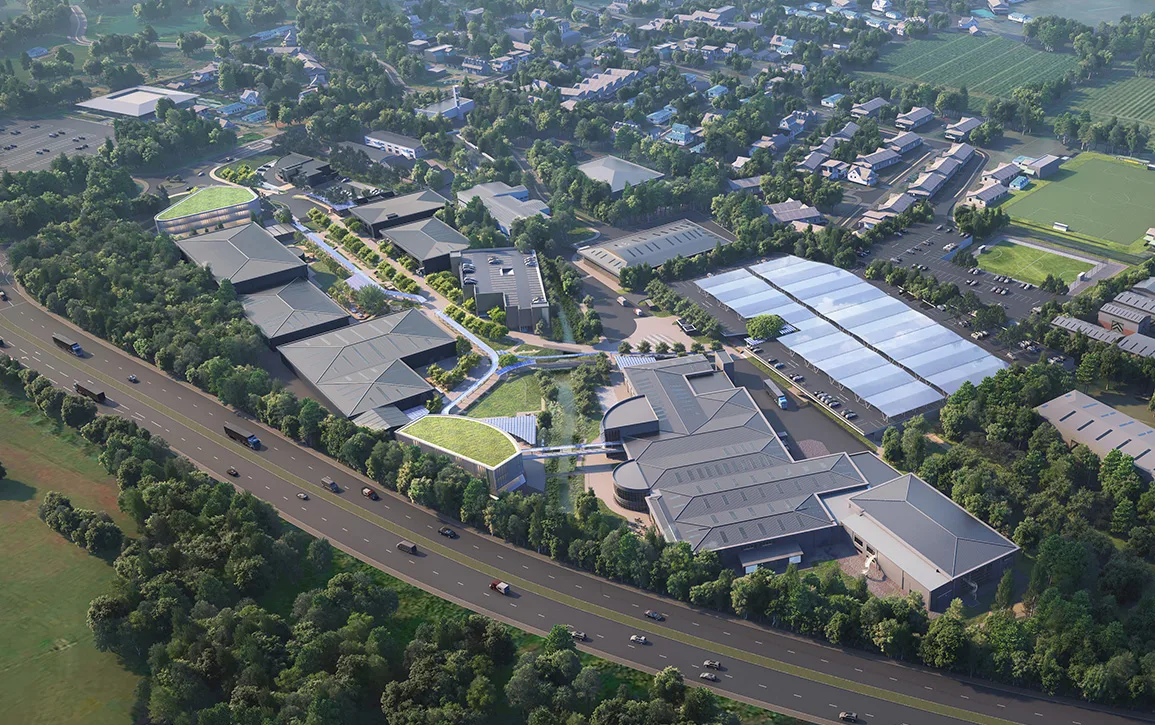
Brackley (Chassis & Operations): The team’s operational headquarters is located in Brackley, Northamptonshire. This facility is the nerve center of the operation, housing the design offices, wind tunnel, simulators, and manufacturing bays. It is effectively a technology campus that rivals Silicon Valley in terms of innovation. In recent years, the Brackley campus has undergone a £70 million redevelopment to create a net-zero carbon facility. This includes pedestrianized zones, employee well-being centers, and state-of-the-art logistics hubs. The goal is to create a "Silicon Valley" style environment to attract the best engineering talent in the world.
Brixworth (High Performance Powertrains): Located just 25 miles away is Mercedes AMG High Performance Powertrains (HPP) in Brixworth. This is where the magic of the V6 Turbo Hybrid Power Unit happens. It is an independent entity that supplies engines not only to the factory Mercedes team but also to customer teams like McLaren, Williams, and Aston Martin. The synergy between the chassis team in Brackley and the engine team in Brixworth is often cited as the primary reason for their decade-long success.
The Mercedes Junior Team was established to secure the team's future by identifying and nurturing young talent before they reach F1. The program gained fame for its rigorous standards and for providing a clear pathway to the top. The program's philosophy is "quality over quantity." Rather than signing many drivers, they focus on a select few elite prospects.

To sustain its massive operation, Mercedes has cultivated a portfolio of blue-chip partners.

As the team moves into the late 2020s, the primary goal is to return to the absolute zenith of the sport following the dominant Red Bull era. The departure of Lewis Hamilton marked the end of a dynasty, but the arrival of Kimi Antonelli alongside George Russell signals a fresh, aggressive future.
Constructors' Championships: 8 times The team holds the all-time record for the most consecutive Constructors' titles in Formula One history.
Drivers' Championships: 7 times
Since returning as a constructor in 2010, the Mercedes-AMG PETRONAS F1 Team has secured 131 Grand Prix victories (as of the end of the 2025 season). These victories have been delivered by a world-class roster of drivers:
(Note: While Michael Schumacher raced for the team from 2010–2012, his legendary victories occurred prior to this era; Juan Manuel Fangio recorded the team's historic first victories in the 1950s).
The team is synonymous with one-lap pace, having achieved 144 pole positions since 2010. Lewis Hamilton holds the all-time record for the most pole positions in Formula 1 history, with significant contributions also coming from Nico Rosberg, Valtteri Bottas, and George Russell.
Race pace has been a hallmark of the Silver Arrows, with the team recording 116 fastest laps. This consistency has been instrumental in securing their eight Constructors' titles.
Beyond their dominance in Formula 1, Mercedes-AMG has enjoyed immense success across the motorsport spectrum, further establishing the brand's racing pedigree:
The Mercedes-AMG PETRONAS F1 Team, commonly known as Mercedes F1, is one of the most dominant and technologically advanced teams in the history of Formula One. Though their modern iteration was established in 2010, the marque’s racing roots stretch back to the 1930s and the 1950s, forging a legacy of engineering excellence. Based in the United Kingdom but representing the German automotive giant, Mercedes has become synonymous with the turbo-hybrid era, shattering records and setting new standards for efficiency and performance. As a team, Mercedes has experienced unprecedented periods of supremacy, notably winning eight consecutive Constructors' Championships between 2014 and 2021.
The team’s journey is defined by a relentless pursuit of perfection, often referred to as "The Best or Nothing." From the foundations laid by Ross Brawn and Michael Schumacher to the dynasty overseen by Toto Wolff, the team has cemented its place at the pinnacle of motorsport. Their fierce rivalries, particularly with Red Bull Racing and Ferrari, have produced some of the most dramatic seasons in sporting history, solidifying Mercedes as a titan of the grid.
But beyond the trophies and engineering, Mercedes F1 represents a culture of psychological safety and innovation. It is about precision, teamwork, and a refusal to be complacent. The team’s massive global fanbase supports the "Silver Arrows" at circuits around the world, drawn to the brand's history of speed and its modern commitment to diversity and inclusion.

The team’s nickname, the Silver Arrows (Silberpfeile), is legendary in motorsport folklore. The story dates back to 1934, where legend holds that the team scraped the white paint off their cars to expose the bare aluminum skin to meet weight regulations, leaving them distinctively silver. This colour signifies innovation and adaptability. In recent years, the livery has incorporated Petronas teal and Ineos red, creating a striking visual identity. The nose of the car proudly bears the Three-Pointed Star, a symbol representing Mercedes-Benz's ambition to dominate land, sea, and air. Notably, the team temporarily switched to an all-black livery in 2020 and 2021 to take a firm stand against racism and promote diversity, adding a layer of social consciousness to their sporting identity.

Since returning to the sport as a constructor, Mercedes F1 has fielded some of the greatest talents in racing. Lewis Hamilton stands as the team’s most iconic figure. Joining in 2013, Hamilton formed a partnership that redefined the sport, equaling Michael Schumacher’s record of seven world titles and becoming the sport's all-time top winner. His speed, racecraft, and activism have made him the face of the brand.
Before Hamilton’s dominance, the team was anchored by the legendary Michael Schumacher, whose technical feedback helped build the foundation for future success. Nico Rosberg, who spent his entire F1 career with the team (in its modern era), engaged in a fierce intra-team battle with Hamilton, culminating in Rosberg winning the 2016 World Championship before retiring. Valtteri Bottas played a crucial role as a reliable teammate, securing multiple Constructors' titles, while the young talent George Russell represents the team's future, bringing fresh energy and raw speed to the cockpit.

Mercedes’ most intense rivalry in recent years has been with Red Bull Racing. The 2021 season remains one of the most heated in F1 history, featuring a season-long duel between Lewis Hamilton and Max Verstappen that went down to the very last lap. This rivalry was marked by on-track collisions, strategic wars between team principals Toto Wolff and Christian Horner, and immense pressure.
Historically, Mercedes also shares a prestigious rivalry with Scuderia Ferrari. The battle between the "Prancing Horse" and the "Silver Arrows," particularly during the 2017 and 2018 seasons involving Sebastian Vettel, was a clash of automotive ideologies—Italian passion versus German precision. These battles for the World Championship turned race weekends into tense, high-stakes thrillers.

While they race globally, the heart of the team beats in two state-of-the-art campuses in England. The chassis is designed and built in Brackley, a facility that operates more like an aerospace laboratory than a garage. This is where the wind tunnel, simulators, and design offices are located, housing hundreds of engineers and aerodynamicists.
Just down the road in Brixworth lies Mercedes AMG High Performance Powertrains (HPP). This is where the incredibly complex V6 Turbo Hybrid Power Units are manufactured. The seamless integration between the chassis team in Brackley and the engine team in Brixworth is often cited as the secret weapon behind their decade of dominance. Together, these factories employ over a thousand people dedicated to making the W-series cars go faster.

Under the leadership of Team Principal Toto Wolff and the late Non-Executive Chairman Niki Lauda, Mercedes developed a unique "No Blame" culture. This philosophy encourages team members to admit mistakes openly so the process can be fixed, rather than the person being punished. This approach allowed the team to recover from setbacks faster than their rivals.
The team also prides itself on the pit crew, often executing sub-2.5 second pit stops under immense pressure. The radio message "Hammer Time", used by race engineer Peter "Bono" Bonnington to tell Hamilton to push to the limit, has become a pop-culture catchphrase, symbolizing the moment the team unleashes its full potential.


