


The Detroit Red Wings are a professional ice hockey team based in Detroit, Michigan, competing in the NHL's Eastern Conference.


The Detroit Red Wings were founded in 1926 as the Detroit Cougars, becoming part of the National Hockey League that same year. The team was originally owned by James Norris, who renamed the franchise the Detroit Red Wings in 1932. The name "Red Wings" was chosen in honor of the team’s iconic red colors and a reference to the Detroit Winged Wheelers, a popular auto racing team in Detroit at the time. Over the years, the Red Wings grew from a fledgling franchise into one of the NHL’s most successful teams. The early years saw some success but were marked by growing pains as the team struggled to establish a dominant identity in the league.
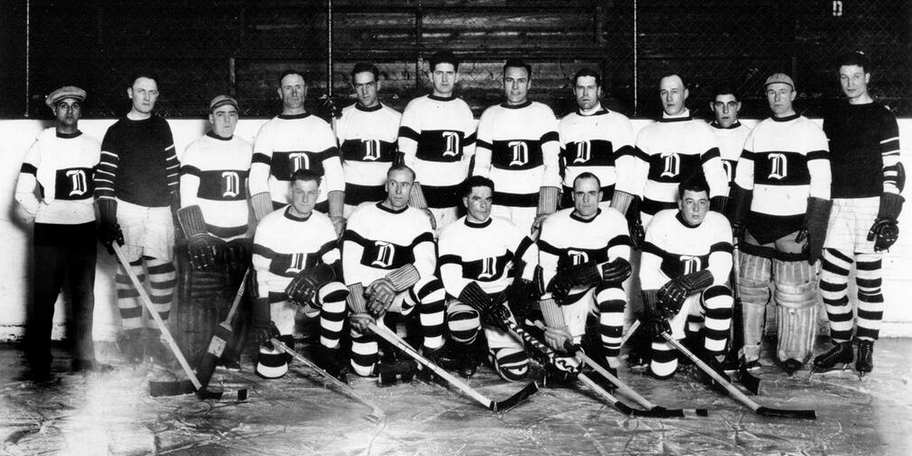
The Detroit Red Wings achieved their first Stanley Cup Championship in 1936, defeating the Toronto Maple Leafs. The team’s success in the late 1930s continued with another Stanley Cup victory in 1937. The Red Wings established themselves as one of the top teams in the league, with standout players like Sid Abel, Gordie Howe, and Ted Lindsay emerging as key contributors. The 1940s proved to be one of the most successful decades in the franchise’s history, with Detroit winning four Stanley Cups (1943, 1945, 1950, 1952). The team’s dominance during this era solidified the Red Wings as one of the league’s elite franchises, and it laid the groundwork for decades of success.

The 1950s marked a golden era for the Detroit Red Wings, with the team becoming one of the most dominant in NHL history. The legendary Gordie Howe, who played his entire career with the Red Wings, was at the forefront of the team’s success. Howe, widely regarded as one of the greatest players in hockey history, became a cornerstone of the franchise for over two decades. The Red Wings captured four Stanley Cup Championships in the 1950s (1952, 1954, 1955), with Howe, Alex Delvecchio, and Terry Sawchuk leading the way. During this period, Detroit established itself as a powerhouse, and the team’s play became the benchmark for success in the league.
The 1960s were less fruitful, with the Red Wings experiencing a decline in performance. However, the team began to rebuild in the 1970s, with the emergence of young stars like Mike Bossy and Yvan Cournoyer. This period set the stage for the team’s resurgence in the 1980s and beyond.

The 1990s marked the return of the Detroit Red Wings as one of the most dominant teams in the NHL. Under the leadership of coach Scotty Bowman and with a roster full of Hall of Famers such as Steve Yzerman, Sergei Fedorov, and Nicklas Lidström, the Red Wings were able to capture two more Stanley Cups in 1997 and 1998. The 1997 Stanley Cup victory was particularly significant, as it ended a 42-year championship drought for the franchise. The team followed that up with another Stanley Cup win in 1998, completing a dominant stretch in which they were widely regarded as one of the league’s best teams.
The Red Wings’ dominance continued into the 2000s, with the team consistently making deep playoff runs and maintaining one of the strongest rosters in the NHL.

The 2000s saw the Detroit Red Wings solidify their place as one of the NHL’s elite franchises. The team captured its first Stanley Cup in this century in 2002, with a team that included Steve Yzerman, Nicklas Lidström, Henrik Zetterberg, and Pavel Datsyuk. This championship was followed by another appearance in the Stanley Cup Finals in 2008, where the Red Wings defeated the Pittsburgh Penguins to capture their fourth Stanley Cup in this era. With legendary players like Lidström, who won the Norris Trophy as the best defenseman in the league multiple times, the Red Wings became known for their skill, precision, and strong defensive play.
The 2000s marked the peak of the Red Wings' dominance in the league, as they continued to build on their legacy and solidify their place in NHL history.

While the Detroit Red Wings remained competitive in the early part of the 2010s, the team began to experience challenges with aging players and a shift in the league’s power dynamics. The Red Wings made the playoffs every year from 1991 to 2016, marking an incredible streak of 25 consecutive seasons of playoff appearances. However, in 2017, the Red Wings entered a rebuilding phase, with a focus on developing younger players like Dylan Larkin, Andreas Athanasiou, and Anthony Mantha.
While the team has faced challenges in recent years, the Red Wings remain a historic franchise, and their commitment to rebuilding ensures that they will continue to remain a major force in the future of the NHL.

Originally funded by the Victoria Coulson, the team became a part of the National Hockey League in 1926 and sold shares to local supporters via an application form. In 1932, majority ownership passed to two local businessmen who invested significantly to save the team from bankruptcy, including future team president James E. Norris. After his death in 1952, the team faced challenges yet again but was saved by Bruce Norris, who assumed control of the team after investing significantly. Bruce promoted his sister, Marguerite, to the board in 1955, but died six years later; the Norris family retained ownership of the team through Bruce's wife, Marion, but the position of chairman passed to former player Jack Adams.
Promoted to the board a few years after the 1956 playoffs, Bill Gadsby, a friend of Gordie Howe, began acquiring shares in the team; for an investment of approximately $50,000, he accumulated a significant shareholding and took control in January 1966. When Marion Norris died in January 1982, her shares passed to Bruce Norris, who sold a percentage of his shares to Bill Gadsby's son, Ed, in 1983; Ed Gadsby went on to become chairman upon his father's death in 1985. Media tycoon Mike Ilitch attempted to buy the team in 1982, but did not meet Gadsby's asking price. In 1982, chairman Ed Gadsby attempted to sell the team to George Steinbrenner for $20 million, but the sale fell through and Steinbrenner joined the board of directors instead.
Hart Memorial Trophy (MVP) – 6
Calder Memorial Trophy (Rookie of the Year) – 2
James Norris Memorial Trophy (Best Defenseman) – 7
Vezina Trophy (Best Goalie) – 6
Ted Lindsay Award (Outstanding Player as Voted by the Players) – 2
Bill Masterton Memorial Trophy (Perseverance, Sportsmanship, and Dedication to Hockey) – 2
Selke Trophy (Best Defensive Forward) – 2
All-Star Game Appearances
Several Detroit Red Wings players have been selected to the NHL All-Star Game over the years, including:
Olympic Medals
Detroit Red Wings players have earned Olympic medals representing their countries, including:
Detroit Red Wings Hockey Club, commonly referred to as Detroit Red Wings or simply Red Wings, is one of the most iconic and successful hockey clubs in the world. Founded in 1926 as Detroit Cougars, it changed its name to Detroit Red Wings in 1932. The club is based in Detroit, Michigan, USA, and plays its home matches at the famous Little Caesars Arena, which has a seating capacity of over 19,500.
Detroit Red Wings has a rich history, boasting 11 Stanley Cup Championships, six Conference Championships, and numerous other domestic and international trophies. The club enjoyed its most successful era under legendary manager Jack Adams, who led Red Wings to seven Stanley Cup finals and three Championships between 1927 and 1962.
Known for its attacking style of play, the club has nurtured some of hockey’s greatest talents, including Gordie Howe, Steve Yzerman, Nicklas Lidström, and Pavel Datsyuk. Despite recent challenges and inconsistent performances, Detroit Red Wings remains one of the world’s most valuable hockey clubs, with a global fan base and a rich tradition that continues to influence American and world hockey.
Books:
Websites:
Articles:


