
Sports and Media
Morocco's Football Stadiums: The Ultimate Guide to World Cup 2030 Venues and the Hassan II Mega-Stadium
15 Jun 2026

Morocco has long been a nation where football runs deep in the culture. Today, backed by a decade of major investment, the Kingdom boasts a network of world-class stadiums that hosted AFCON 2025 and are being readied for the 2030 FIFA World Cup, co-hosted with Spain and Portugal. Here is a complete guide to Morocco's most significant football venues, past, present, and under construction.
Morocco's Stadium Investment: The Bigger Picture
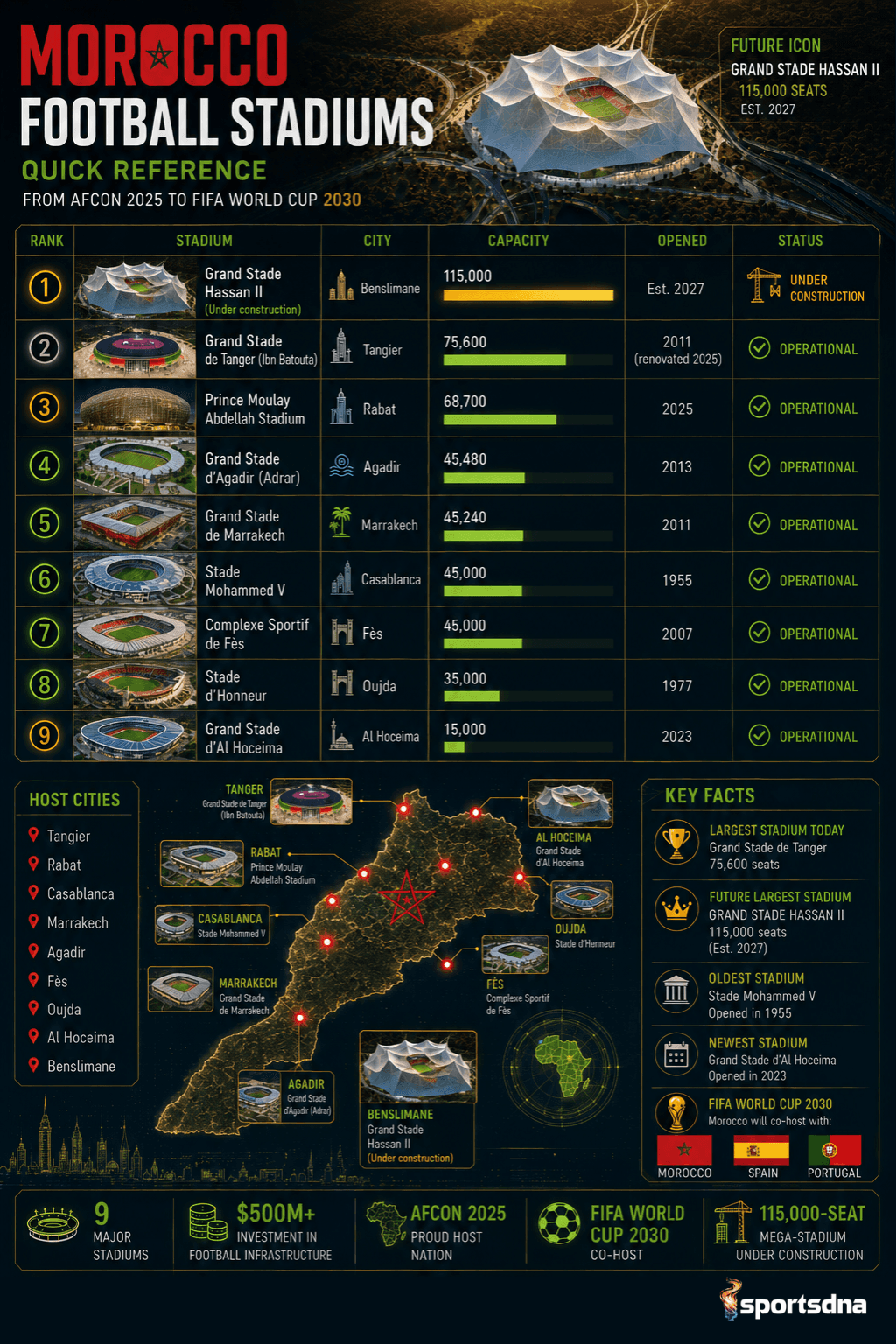
Morocco's football infrastructure boom did not happen by accident. The country's successful bid to co-host the 2030 FIFA World Cup, alongside Spain and Portugal and its role as sole host of AFCON 2025 have driven over $500 million in stadium investment in recent years. Nine stadiums were either newly built or renovated for AFCON 2025 alone, spread across six host cities: Rabat, Tangier, Casablanca, Marrakech, Fès, and Agadir.
The broader vision is even more transformative. Morocco is simultaneously developing its domestic Botola Pro league, strengthening its national team infrastructure following the historic 2022 FIFA World Cup semi-final run, and positioning itself as a long-term pillar of African and global football governance.
With the Grand Stade Hassan II rising from the Benslimane forest and a network of modernised, high-capacity venues already in operation from coast to mountain, Morocco is no longer just a football-loving country, it is becoming one of the sport's most important architectural and competitive stages.
1. Grand Stade de Tanger (Ibn Batouta Stadium) — Tangier
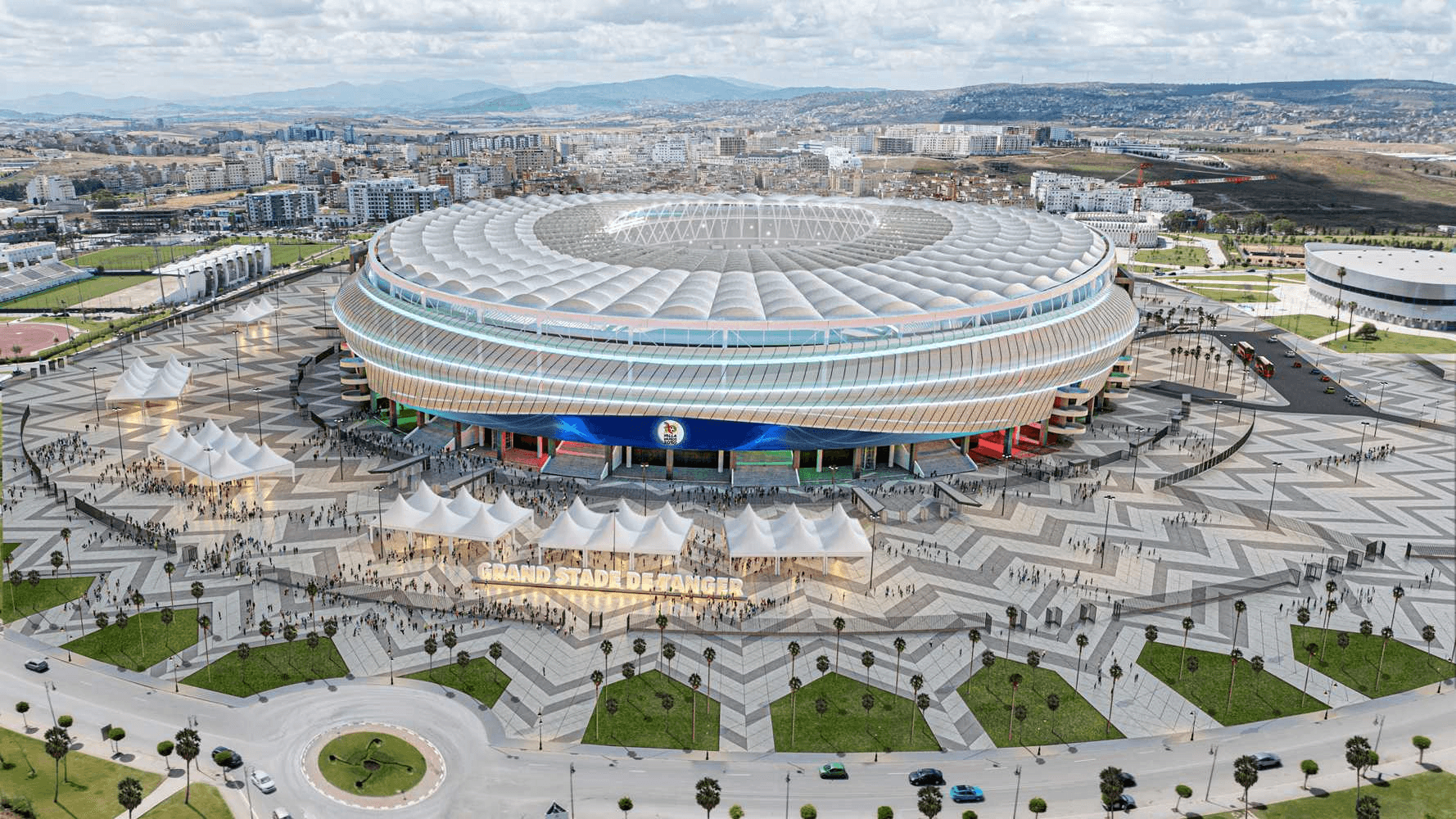
Capacity: 75,600 | Opened: 2011 | Renovated: 2023–2025
Morocco's current largest stadium sits on the northern tip of Africa in Tangier, the city that straddles two continents across the Strait of Gibraltar. Named after the legendary 14th-century Moroccan explorer Ibn Battuta, the Grand Stade de Tanger was originally opened in April 2011 as a 45,000-seat multi-purpose arena after nearly a decade of construction.
The stadium has since undergone two major expansions. Between 2020 and 2023, capacity was extended to 65,000 seats. Then, ahead of AFCON 2025, an extensive renovation added a new roof, removed the athletics track to bring fans closer to the pitch, and pushed capacity to 75,600 seats, making it the largest football venue on the African continent until the Hassan II Stadium is completed.
The venue has hosted the Trophée des Champions (2011, 2017), the 2018 Supercopa de España between Barcelona and Sevilla, and multiple Morocco national team fixtures. It served as a semi-final venue at AFCON 2025 and is confirmed as one of the 2030 World Cup host stadiums.
Home team: IR Tanger
2. Prince Moulay Abdellah Stadium — Rabat
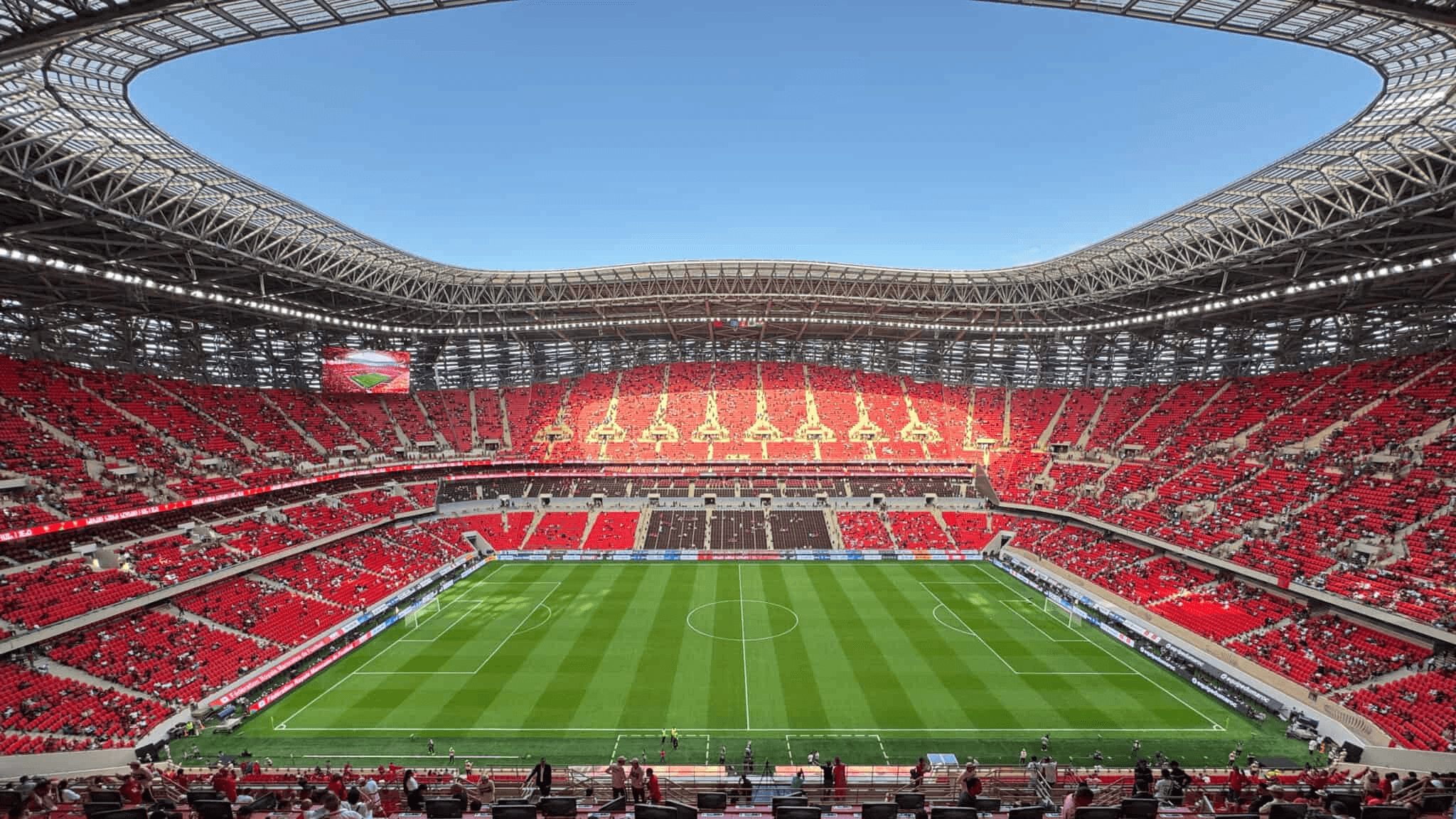
Capacity: 68,700 | Opened: September 2025
Built on the site of Rabat's historic 1983 stadium, the Prince Moulay Abdellah Stadium was completely rebuilt and inaugurated on 4 September 2025 during a 2026 FIFA World Cup qualifier. It is now Morocco's second-largest stadium, with a current seated capacity of 68,095 that can be expanded to 68,700 for the 2030 World Cup.
The stadium is part of a vast sports complex managed by SONARGES, the national sports infrastructure operator, and owned by the Urban Community of Rabat. The complex also includes a 21,000-seat Olympic Stadium, a 10,000-seat indoor arena, and an Olympic swimming pool. It hosted several key matches at AFCON 2025, including the tournament's opening fixture in which Morocco defeated Comoros 2–0 in a ceremony chaired by Crown Prince Moulay El Hassan.
The venue has previously welcomed major events including the Trophée des Champions (2011, 2017), the 2018 Spanish Super Cup, the FIFA Club World Cup 2022, and Morocco's famous 2–1 victory over Brazil in March 2023.
Home teams: AS FAR, Morocco national football team
3. Grand Stade d'Agadir (Adrar Stadium) — Agadir
Capacity: 45,480 | Opened: 11 October 2013
Located in the heart of Agadir on Morocco's Atlantic coast, the Grand Stade d'Agadir, also known as Adrar Stadium, from the Tamazight word for “mountain”, is one of the most architecturally distinctive venues in Africa. Its stone-stepped pyramid facade pays tribute to the nearby Atlas Mountains, making it as striking to look at as it is to watch football inside.
Inaugurated on 11 October 2013, the stadium quickly became a landmark of Moroccan football. It hosted matches at both AFCON 2025 and the FIFA Club World Cups of 2013 and 2014. The venue's location makes it a unique destination, offering fans a combination of world-class football and Morocco's stunning Atlantic coastline.
Home team: HUS Agadir
4. Grand Stade de Marrakech — Marrakech
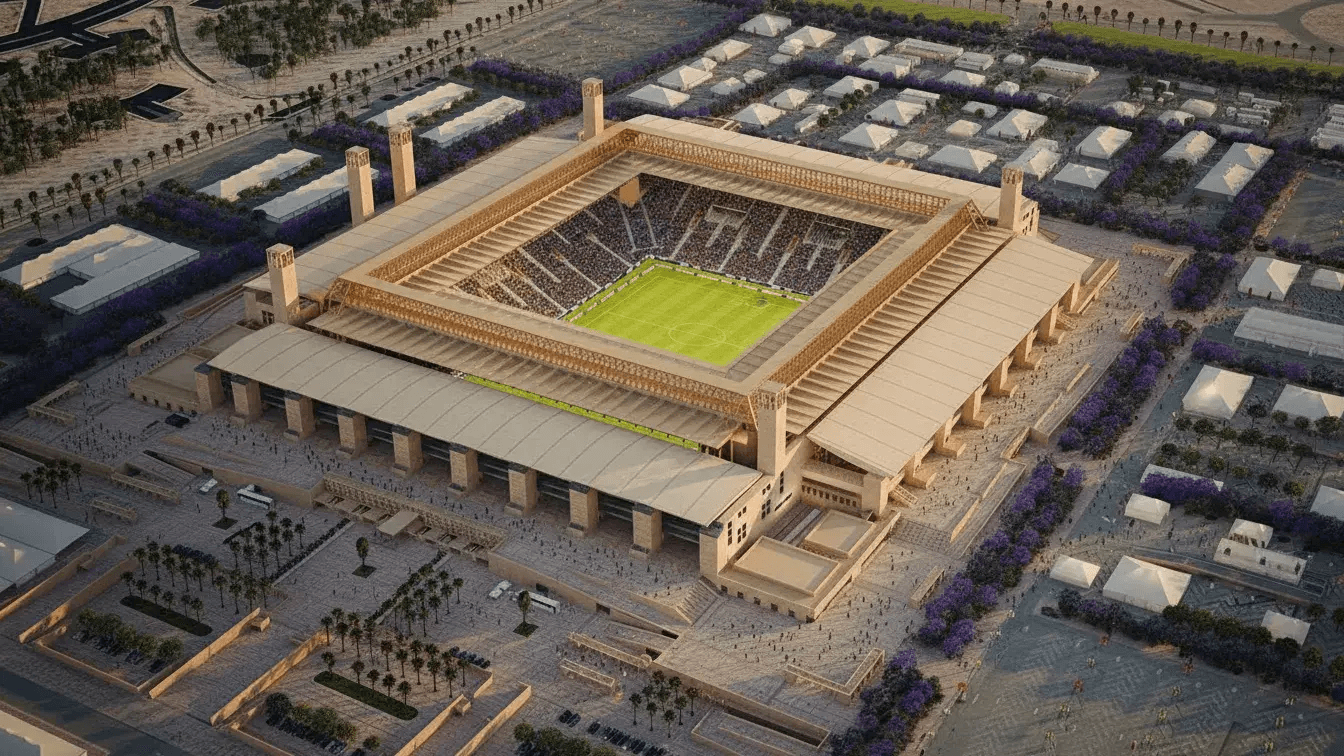
Capacity: 45,240 | Opened: January 2011
Situated 11 kilometres north of the Red City's famous medina, the Grand Stade de Marrakech is a multi-purpose venue designed to international standards and built between 2003 and 2011. Its inauguration in January 2011 saw Wydad AC face PSG (1–1) and Kawkab Marrakech host Olympique Lyonnais (0–0) on the same evening.
The complex is among the most complete in Morocco: it features a 5,000-seat auxiliary stadium, an athletics track, a 1,000 m² media centre, medical facilities, and parking for 7,500 vehicles. The stadium has hosted FIFA Club World Cup matches (2013, 2014), AFCON qualifiers, and numerous Morocco national team fixtures. It was one of the nine venues used for AFCON 2025.
Home team: KAC Marrakech
5. Stade Mohammed V — Casablanca
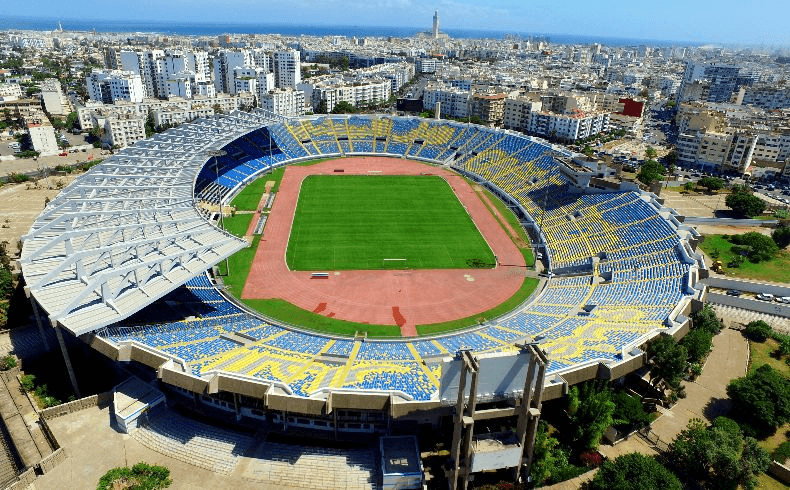
Capacity: 45,000 | Opened: 1955
The Stade Mohammed V is Morocco's most storied football ground. Opened in 1955 in the heart of Casablanca, it has served as the home of both Wydad AC and Raja CA, two of the most supported clubs on the African continent and has witnessed some of the most dramatic moments in Moroccan football history.
The stadium underwent renovation ahead of AFCON 2025 to bring it up to modern standards. It remains a deeply symbolic venue, but it is also transitional: the Stade Mohammed V is set to be superseded by the Hassan II Stadium as the primary home for Wydad and Raja once the new mega-stadium is completed. Until then, it remains the spiritual and historical centre of Moroccan club football.
Home teams: Wydad AC, Raja CA
6. Complexe Sportif de Fès — Fès
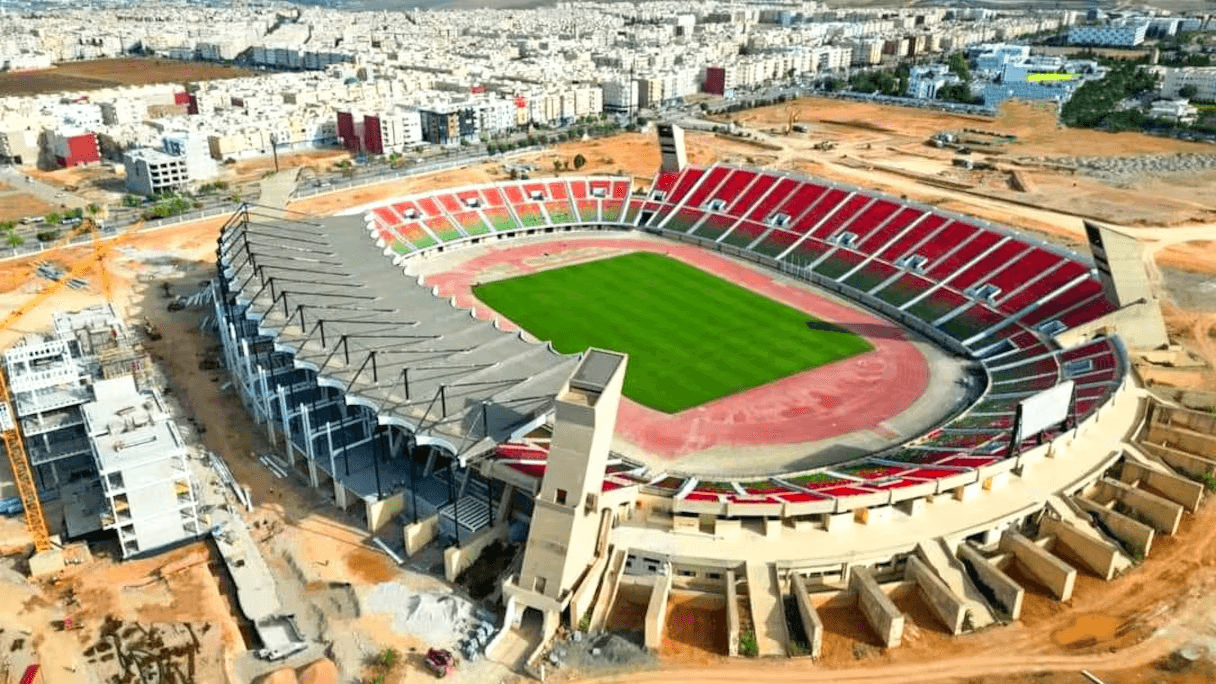
Capacity: 45,000 | Opened: 2007
Located on the road connecting Fès to Sefrou, the Fès Sports Complex is a major football venue whose design blends traditional Moroccan architecture with modern facilities. Its 45,000-seat capacity makes it one of the country's larger arenas, offering world-class amenities with a vibrant cultural identity rooted in one of Morocco's oldest imperial cities.
The stadium hosted group-stage and knockout matches at AFCON 2025 and is among the venues confirmed for the 2030 FIFA World Cup.
Home team: MAS Fès
7. Stade d'Honneur — Oujda
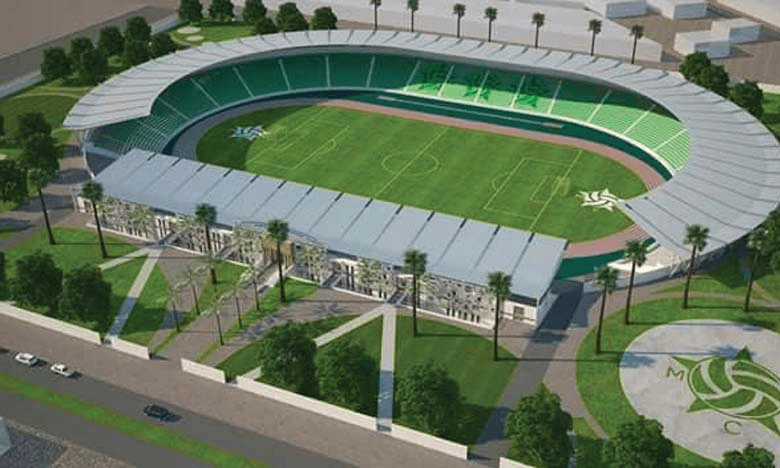
Capacity: 35,000 | Opened: 1977
In eastern Morocco, close to the Algerian border, the Stade d'Honneur in Oujda has long served as the region's primary football venue. While not among Morocco's newest stadiums, it retains an important role in the country's domestic football pyramid as the home of MC Oujda.
8. Grand Stade d'Al Hoceima — Al Hoceima
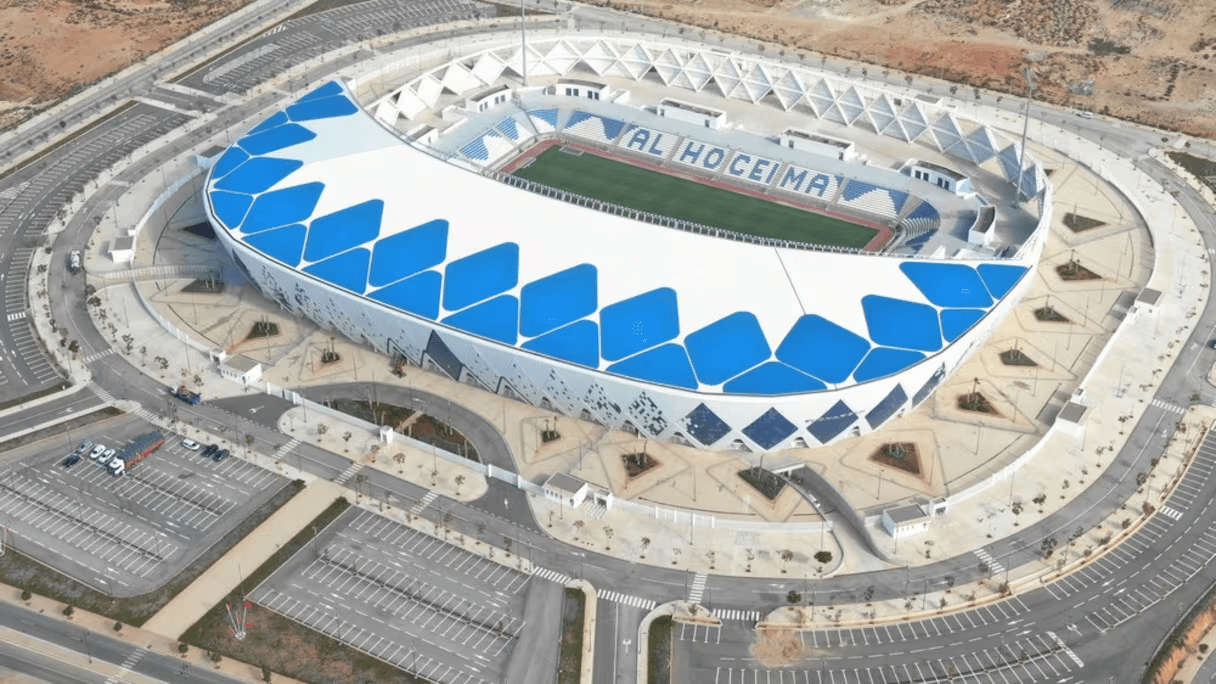
Capacity: 15,000 | Opened: 2023
One of Morocco's newest stadiums, the Grand Stade d'Al Hoceima was completed in 2023 and represents the country's commitment to expanding quality football infrastructure beyond its major cities. Situated in the Rif region in the north of the country, the stadium serves both community and competitive needs.
The Future: Grand Stade Hassan II — Benslimane
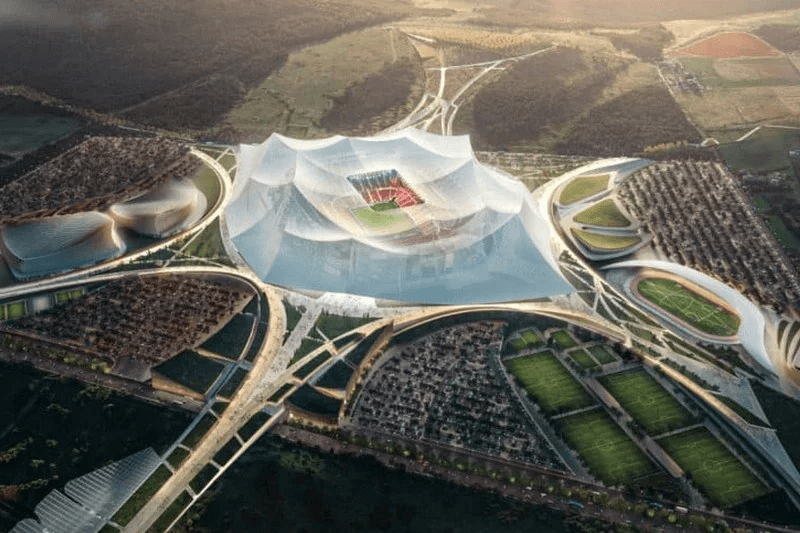
Capacity: 115,000 | Target completion: December 2027 | Status: Under Construction
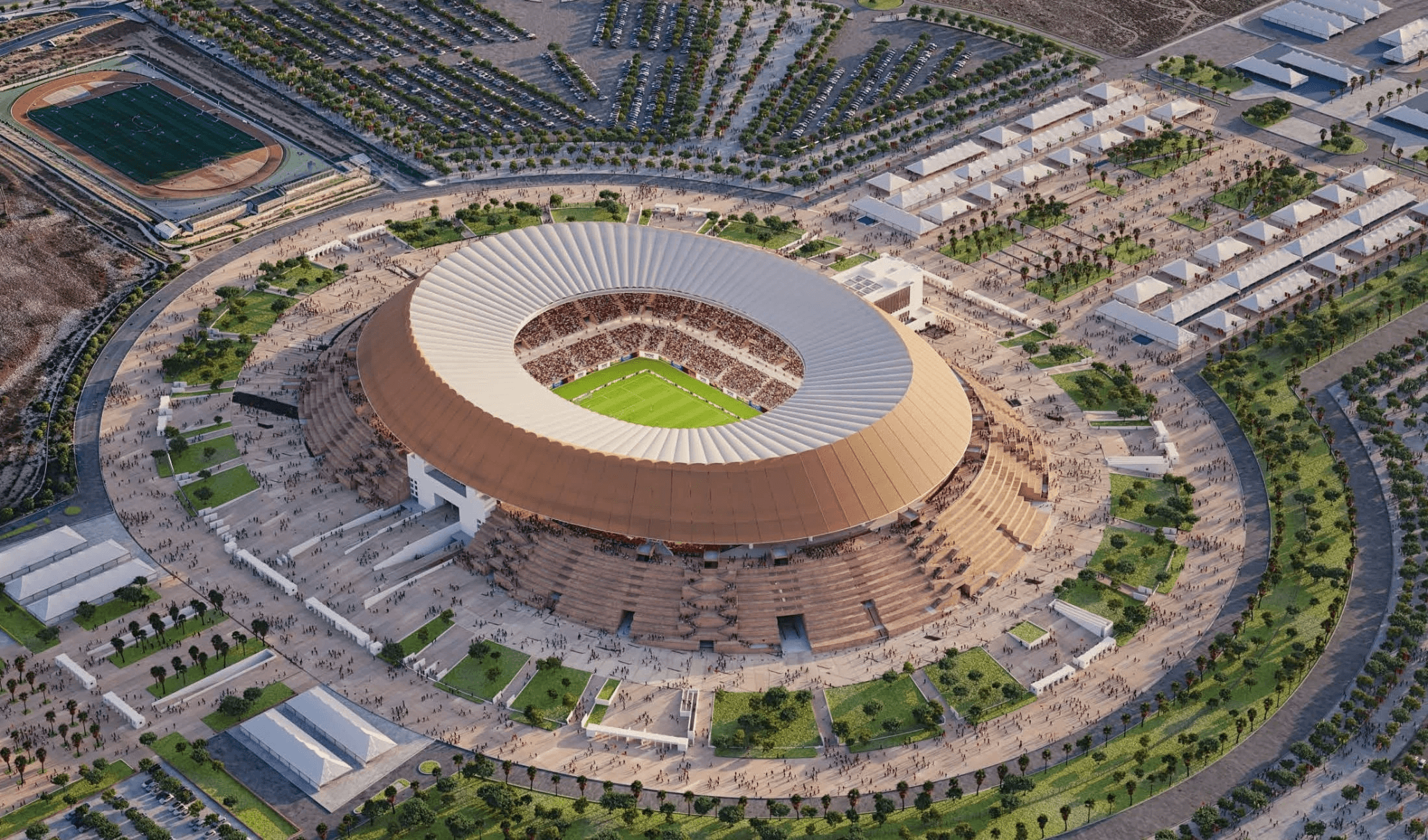
Morocco's most ambitious infrastructure project and arguably the most exciting stadium development anywhere in the world right now, is the Grand Stade Hassan II. Located in Benslimane province, approximately 38 kilometres northeast of Casablanca, this 115,000-seat colossus is designed to become the largest football stadium on the planet, surpassing North Korea's May Day Stadium (114,000).
Designed by global stadium specialists Populous in collaboration with Moroccan firm Oualalou + Choi, the architecture draws from Morocco's traditional "moussem" (festival) gatherings, with an imposing aluminium lattice roof that is partially translucent, embracing the wooded Benslimane landscape. The stadium will have three seating levels, the first with 22,600 seats, the second with 30,600 seats, and the third with 62,000 seats, all oriented around a world-class pitch.
A $320 million construction contract was awarded in June 2025 to a joint venture of local firms TGCC and SGTM. As of mid-2026, construction is approximately 40% complete, with over 5,000 workers on site working continuous three-shift days. Completion is scheduled for December 2027.
The stadium has become a serious contender to host the 2030 FIFA World Cup Final, drawing praise from international media including Spanish sports press, who have acknowledged it as a genuine rival to Madrid's Santiago Bernabéu and Barcelona's Camp Nou. Moroccan officials have confirmed it will also be a multipurpose venue capable of hosting concerts, cultural events, and potentially Olympic Games — which would be a first for Africa.
Once complete, the Hassan II Stadium will replace Stade Mohammed V as the primary home of Wydad AC and Raja CA, as well as the Morocco national team.
Morocco Football Stadiums: Quick Reference
Stadium | City | Capacity | Opened |
| Grand Stade de Tanger (Ibn Batouta) | Tangier | 75,600 | 2011 (renovated 2025) |
| Prince Moulay Abdellah Stadium | Rabat | 68,700 | 2025 |
| Grand Stade d'Agadir (Adrar) | Agadir | 45,480 | 2013 |
| Grand Stade de Marrakech | Marrakech | 45,240 | 2011 |
| Stade Mohammed V | Casablanca | 45,000 | 1955 |
| Complexe Sportif de Fès | Fès | 45,000 | 2007 |
| Stade d'Honneur | Oujda | 35,000 | 1977 |
| Grand Stade d'Al Hoceima | Al Hoceima | 15,000 | 2023 |
| Grand Stade Hassan II (under construction) | Benslimane | 115,000 | Est. 2027 |
Sources
- CAF Online – AFCON 2025 Stadiums Guide: https://www.cafonline.com/afcon2025/news/your-guide-to-all-totalenergies-caf-afcon-morocco-2025-host-venues/
- CAF Online – Moulay Abdellah Stadium Profile: https://www.cafonline.com/afcon2025/stadiums/moulay-abdellah-stadium-rabat/
- Wikipedia – List of Football Stadiums in Morocco: https://en.wikipedia.org/wiki/List_of_football_stadiums_in_Morocco
- Wikipedia – Tangier Grand Stadium: https://en.wikipedia.org/wiki/Ibn_Batouta_Stadium
- StadiumDB – Grand Stade de Tanger: https://stadiumdb.com/stadiums/mar/stade_ibn_batouta
- StadiumDB – Grand Stade Hassan II Construction Update: https://stadiumdb.com/news/2025/03/morocco_grand_stade_hassan_ii_to_be_completed_ahead_of_schedule
- Inside World Football – Morocco Launches Hassan II Construction Tender: https://www.insideworldfootball.com/2025/05/22/morocco-launches-construction-tender-2030-world-cup-showpiece-stadium/
- Inside World Football – Morocco Awards $320M Build Contract: https://www.insideworldfootball.com/2025/06/23/morocco-awards-320m-build-contract-casablanca-showpiece-stadium/
- Morocco World News – Hassan II Stadium Construction Update: https://www.moroccoworldnews.com/2026/05/307512/world-cup-2030-spanish-media-impressed-by-moroccos-hassan-ii-stadium-doubts-real-madrids-bernabeu-for-the-final/
- Football Ground Guide – Stade Hassan II Update: https://footballgroundguide.com/news/stade-hassan-ii-update-hints-at-completion-timeline-ahead-of-potential-2030-world-cup-final.html
- Construction Review Online – Hassan II Stadium Construction: https://constructionreviewonline.com/500m-hassan-ii-stadium-construction-underway-ahead-of-2030-world-cup-morocco/
- Yabiladi – AFCON 2025 Stadium Guide: https://en.yabiladi.com/articles/details/184083/from-rabat-agadir-inside-nine.html
- MoroccoBeat – Complete Guide to AFCON 2025 Stadiums: https://moroccobeat.com/football-mega-events/can-2025-complete-guide-stadiums-morocco/


